P-38 assembly… going slow but some progress

With the recent move to a new house, time in the shop has been minimized but that is starting to change and I had time recently for a couple sessions.  

Session one started with some of the structural assembly.  Motion RC has provided an assembly video and between that and the manual we got most of the screws in the right holes on the first (OK, second… maybe third) try.  Well at least I guess we did.  If you decide to get one of these I highly recommend you go through the video and the manual a few times to figure out which screws go where before you assemble anything.  Luckily (or maybe by design?) The screws are all the same diameter so even if you use the wrong ones, you aren’t permanently expanding the holes in the plastic and messing them up so that swapping them around later doesn’t create a big issue!  Likewise the wiring runs can be confusing.  Take special note that there is an extra wire on the port side which is where the landing light is located.  We got both the nacelles, the horizontal stab and the center pod all tied together and the wiring runs done during the first session mostly by just following the video.

Let me take a moment here to add in some commentary on the ease of assembly.  The manual that comes with the airplane is a bit confusing (thus the video I suppose).  Most of the manual seems to be redundant information since a lot of the document is dedicated to installing the servos and landing gear and similar information on topics that are unnecessary since these things are already done for you!  I appreciate the extra work that has already been done for me but then why do I need instructions on how to do it?  I initially tossed the manual to the side and just started to work from the video, but it gets very tiresome trying to play a section/stop and backup and try to find the same section again to be sure what I thought I saw was correct…  I’m convinced I could work much more quickly from a standard written document than from this video.  After a while I went back to the video and kept the manual handy as a secondary reference.  It has some information about linkage lengths and screw sizes that are somewhat easier to find in the case that you need to double check anything.

Some other oddities with the video…  What other  “Comprehensive build video”  includes such vital information  as “Matte/Flat finish paint for enhanced realism”?  I already bought the plane and don’t really need the commercials.  It looks like you could skip the first several minutes or at least condense them to a list of parts that should be in the box.  Also, if you are making a video rather than creating a quality manual, wouldn’t you think some voice over commentary to explain things would be included??  I mean, the video does actually include sound… it’s just that for some reason the producer of the video decided to use only text embedded in the video to impart information on which screws to use where, etc…  I can hear the clicks and scratches of the screws being tightened but no actual instructions are provided as part of the audio track.  Someone suggested to me that this is more universal (for non-English speakers) but the overlaid text is in English so that doesn’t seem to be the reasoning either.  Maybe I’m just a throwback but I’d really much prefer a well written and illustrated manual that takes me through the actual steps that I need to complete the aircraft, rather than this somewhat bizzare video.  OK, rant paused… back to the build.

Both of the aircraft in the shop got to this same stage of assembly on the first evening but for the next session I pressed ahead only on the green model (mine).  For that session I enlisted the help of another flying buddy.  Steve helped assemble linkages for all the control surfaces while I wired the various connections to the provided “control module” or whatever you want to call it.

Pause for rant 2….  I hope this isn’t the start of a pattern.  The part I’m referring to looks sort of like a receiver.  It’s encased in blue plastic and acts as a distribution point for the many, many, many… wires that you have to connect, as well as a sequencer for the gear doors and landing gear.  It also provides one light connection that is strobed, 1 that comes on when the gear deploys and the other 2 are solid and all are labeled Light!?  OK, extra credit for coming up with the box which encapsulates a few Y connections (but not all), a sequencer and the lighting controls… and then I take all that back for making me comb through the document (which labels it wrong!) and then finally just testing it myself or reading a few hundred posts on one of the two active threads that I’m aware of in order to find the actual layout of these light plugs.  Oh, and before I forget it is clearly labeled but double check your polarity on those light connections… they are opposite the servo plugs that they rub up against!!  OK, second rant finished.

After all that was done, I got the receiver bound to the bird and plugged in more wires… did I say there were a lot?  Here’s what it looks like once you get it all connected and routed.
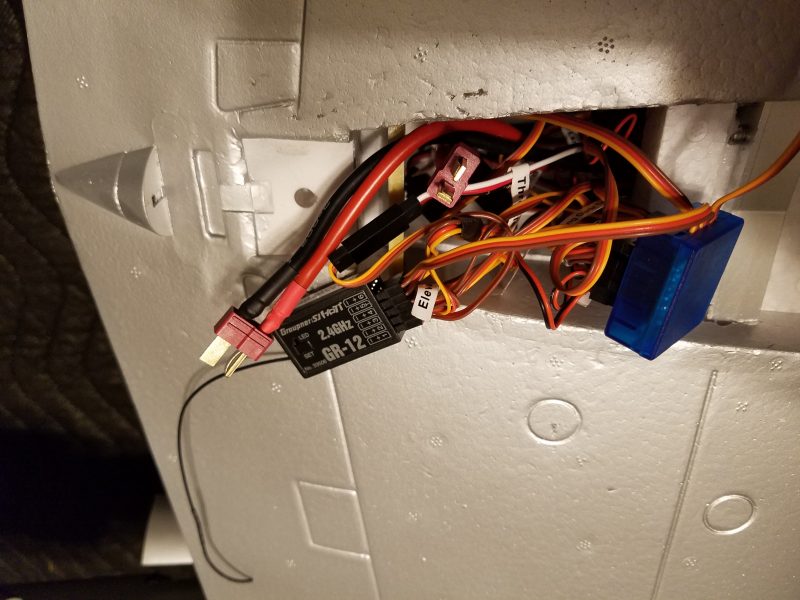
I’m not fond of this spaghetti bowl of wires either but their just seems to be no good way to tame them without some major rewiring.  I’d do that if this was a $3,000 aerobat but for a standoff scale foamy I think I’m just going to live with it as is.

We then attached and mechanically adjusted all the linkages.  This took a bit of doing since you can’t use much of the radios sub-trim when you have 2 or 4 connected servos on most channels.  Nothing wrong with that… I recommend you always get your servos as close to perfect as possible by using mechanical means rather than radio settings.  Just be ready to spend some time as you will need to do this for most every linkage and again the P-38 has a bunch so it can get tedious to get them all correct.  

In a follow up session we did this same thing for the Silver bird belonging to Kelly.  During the process we realized there were some wiring errors where things were plugged into the module (this is when we figured out all the lighting) as well as a retract wire that had been routed in a “non-optimal manner” which made it more difficult to get the wires all plugged in and the module tucked into the center pod.

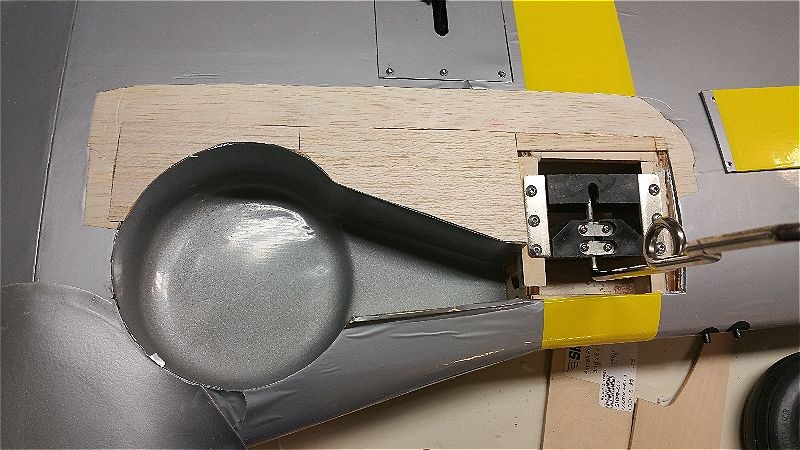
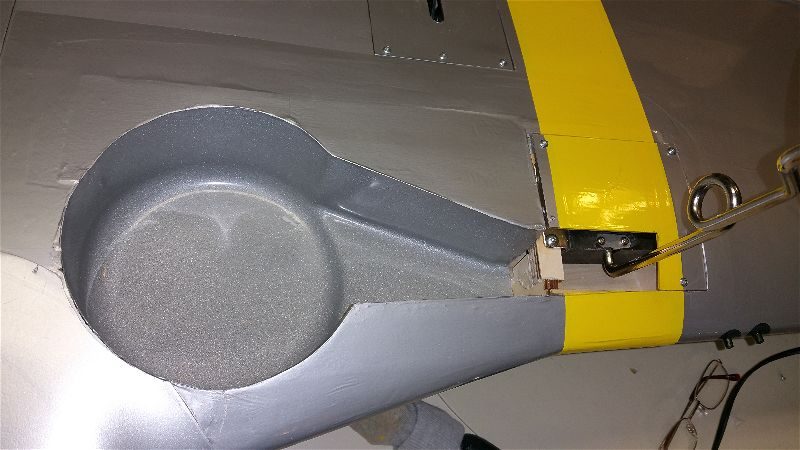
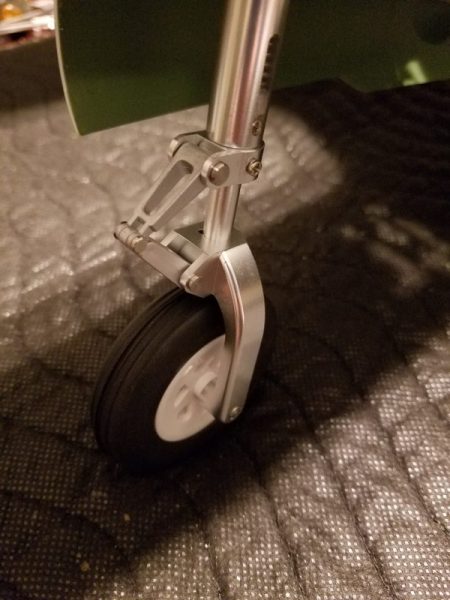
Also between sessions 2 and 3 we went ahead and converted to the new “upgraded” oleo style struts.  My experience with war birds is that you want all the help you can get absorbing landing forces without tearing up the structure, landing gear struts, etc… so these seemed like a deal at only $40 for the set.  The two main gears were pretty much a drop in change.  The only hard part is making sure you don’t strip out the set screws that hold the struts into the retract unit.  About 15 seconds with my soldering iron in the whole prior to loosening each one did the trick nicely.  Flightline/Motion RC did provide several new set screws with the new struts.  Kudos for that.  The new tires look better as well as being marginally larger which is always welcome.  In both cases, I found that keeping the struts as long as possible (there is a very small amount of up and down space available within the groove cut to receive the set screw) helped with any tendency for the tires to rub or bind when moving in and out of the wheel wells.  

The nose gear was a bit more of an adventure as it is held in place with an almost microscopic “C” clip.  A new clip is provided for this as well, which is probably for the best as the chances are you will either bend this beyond further use or lose it when it flies off as you attempt to remove it.  I had two to do and I encountered one of each.  This is the modeling part, right?  I managed to drop the replacement on one of them as well so was left scrounging for a replacement which I found in the bottom of a spare screw and nut drawer.  (It’s not called Jack’s house of everything for nothing… my wife calls it hoarding… tomato/tomato).

Here’s the new strut in place… maybe its even worth chasing tiny c-clips around on the carpet!  It sure looks nice.
During the course of all this I have had to disassemble some parts of the airplane in order to re-run wires and correct wiring errors on both birds.  It’s a challenge to get done correctly and extra hands were a big help during the “re-work”.  This is not a first ARF for sure!

I still have to do the linkages on the silver bird but then we will be back to equilibrium on both.  There is still a lot to do but they are starting to look like airplanes and the Xmas holiday will afford me more time to get some shop time so I’m hoping to get them finished up soon.  I am considering changing over to 2 blade props on my Lightning, but Kelly is going stock with his.  The idea of screws in plastic being what holds the three blades in place makes me uncomfortable and I don’t want to spend a fortune in time and money looking for proper 1 piece props (with reverse pitch for one) and having spinners cut to match etc…   So will probably find some simplistic replacements.  I like 2 blade efficiency anyway if the ground clearance is available and I think it is. 

Hopefully, I’ll have more updates soon.
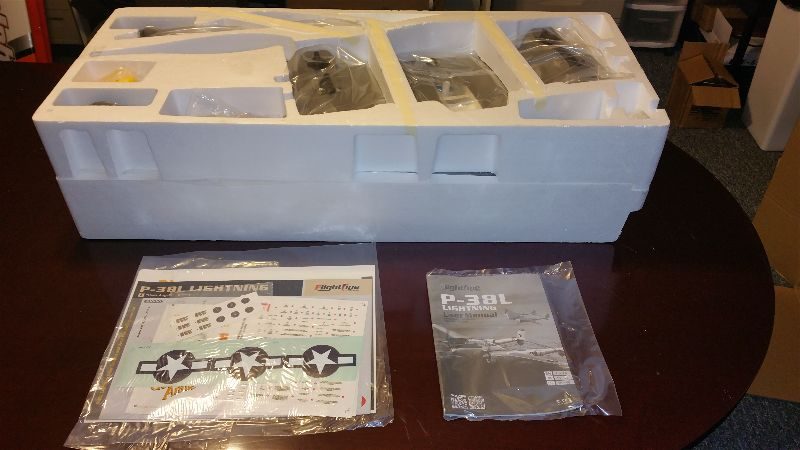
The P-38s are here!!

As I got more involved with RC aircraft, I always wanted a twin engine aircraft… and in my book the only twin worth considering was the P-38 lightning.  I have always thought the P-38 was a gorgeous aircraft and I kept an eye out for a chance to purchase a nice example but there were a few issues with acquiring one.  Remember this was before the advent of high quality ARFs and certainly before low cost, high quality electric power systems became the norm so the only P-38s available were very large, very heavy gas powered craft with equally impressive price tags!  Smaller glow powered versions were few and far between partly because keeping two glow engines in sync has always been a challenge and I would assume partly due to the difficulty of designing an building an aircraft as structurally complicated as the Lightning.

For instance, designing and building a light and rigid boom assembly with the landing gear location limiting your options for structural integrity in the wheel well area would certainly be challenging.  And of course everything about the craft is round and tapered, making for additional challenges for the builder… especially if you wanted to create something close to the scale outline.  Lots of beautiful curves means difficult to form from Balsa, glue and covering.

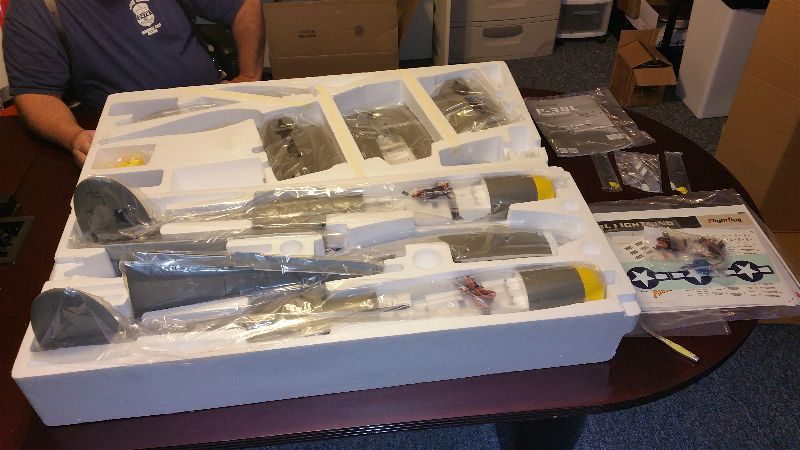
Lucky for me, the days of stronger foam, carbon fiber reinforcement and inexpensive electric power systems is upon us!  Enter the Flightline RC P-38L available through Motion RC.  Since these first became available a few months ago, my buddy Kelly and I have both been watching the various on line forums for reports of both build quality and the air handling of this latest iteration of an RC version of the Lightning.  Reports seemed mostly positive so after he hinted for several months that we both should have one I recently texted Kelly with the phrase “I want the green one!”  It only took about 3 days after that before Kelly arrived at my shop with two fairly large boxes.  Here are a couple shots of the unboxing:

2016-11-10-17-18-03-opt

2016-11-10-17-21-47-opt 

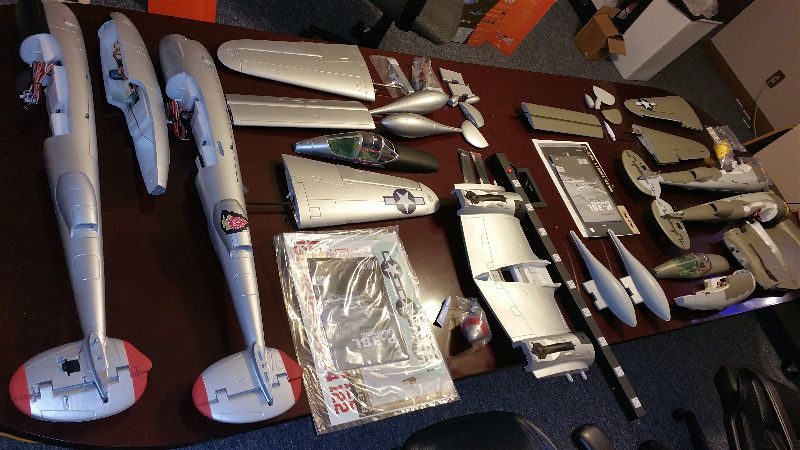
And here is the workbench (all 12′ of it!) covered in P-38 parts!!!  Now that is a bunch of airplane parts….

2016-11-11-19-49-48-opt

At first impression I can say that these things are pretty impressive.  For $349, you are getting what seems to be a fairly strong airframe with two motors, two speed controllers, 9 servos, 3 bladed props, spinners, decals for 4 different aircraft, servo linkages, etc…  Basically it looks like EVERYTHING you need to fly except batteries and a receiver.  Yes, as widely reported, you can certainly see the foam cell structure through the paint.  This is especially true of the silver model as it has a higher gloss/luster to it.  Scale aficionados will doubtless be displeased but the overall lines are very nice and I am not trying to win any scale contests here so my initial impression is that they look pretty good.

I’ll post more as I get to assembling.  I’ve already ordered the upgraded landing struts (they seem like deal for $40 for the set!) and my receiver is on order as well.  I expect to be posting again soon as I don’t think I can stand to let these lay around here for very long.  Christmas just came a month or so early! 


Conversion of the Telemaster 40 to Electric Power – Part 3

When is the 300th flight a maiden?  Telemaster 40 returns to flight once more!

Since the last update about 6 months ago, I finished up the covering job on the Telemaster and got all the servos and radio gear back in the old Telemaster 40.  The usual challenges of hindging, recovering and getting control horns back in place kept me avoiding these somewhat onerous tasks but once I got past some of that and got close enough to see the finish line I quickly finished her up and it was time to put her back in the air.

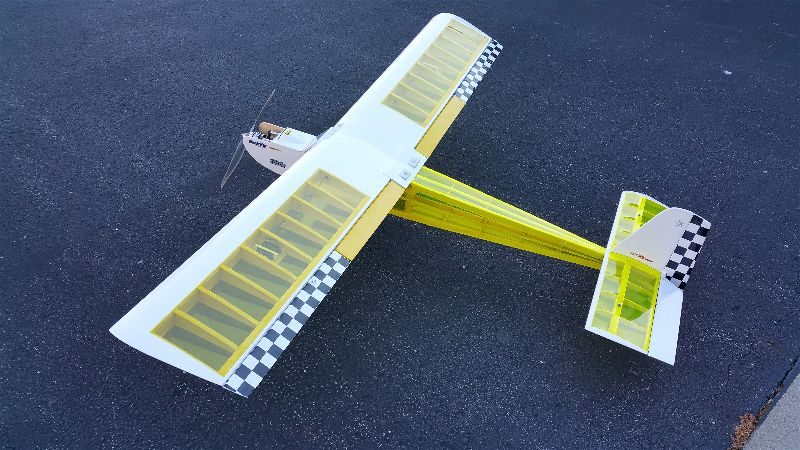
Here it is after the final decals were applied, screws tightened and radio system installed.

2016-05-15 19.38.37-opt

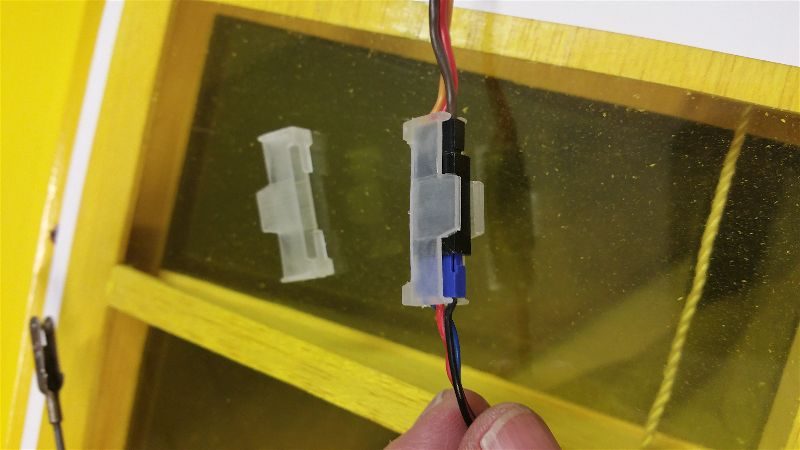
One of the common tasks I ran into when I went to reinstall the servos was to rerun the servo wires out into the wing bays.  Of course I should have run those when I had the covering off but of course that thought didn’t occur to me.  First, I applied the servo clips (how can you attach extensions to servo wires without those?) to insure the wires stay together.

2016-05-14 20.31.50-opt

Then I grabbed my custom servo wire guiding tool (patent pending) and thread the wires back in there…  This tool is quite complicated (a string and a nut) and customizable by picking out a longer string or a smaller or larger nut!  Here it is in action.

2016-05-14 20.30.27-opt

Tie your servo lead to the end of the string, fish the nut down through the wing and pull the wire though… presto!

With the 3700 6S on board the plane now weighs approximately 7lbs.  Figuring the original 5.5lb weight (approximately) and adding the on board fuel weight (maybe 3/4 of a lb) means it has gained maybe 3/4 of a lb flying weight.  This is a bit more than I wanted but this plane flew so light that I think an extra couple pounds would leave a flyable airplane but I admit I would like to keep it as light as possible.  I fully expect the power system to be able to handle up to about a 9lb airplane to at least “hover” if not “pull straight out of hover” levels so it may be that the extra weight won’t cause a problem.

So, with all that in mind, off to the field to meet up with several of my flying buddies and see how it goes.  This is the third covering scheme on this aircraft.  It started off base white with some red and green highlights and then after I needed to do some maintenance that caused much of the red and green to exit, I decided over a white bread sandwich that red, yellow and blue polka dots were the answer.  Now along with the conversion to electric power, I went to a combination of transparent yellow, white and checkerboard black/white.  While all had their appeal, the new scheme is my favorite.

The first flight session went remarkably well.  The new hatch gives ample access to the battery area and there is plenty of room to shift the battery to achieve any desired balance point.  In addition it appears to allow for plenty of air flow and the magnet (which I had been concerned about) is keeping the hatch in place nicely.  After the last flight of the first day, I noticed the engine had started to move.  Upon further investigation I realized just how loose it was!  Here’s a shot showing some of the issue.

2016-05-18 19.55.52-opt

Not one of the mounts is still tight!  Two of the back screws are completely lo0se inside the body and one of the front mount screws is missing!  Yikes!  In the back of my head, as I looked it over I remembered thinking I would go back later and apply thread locker and re-tighten these mount screws.  Such is the danger of spreading out a job like this over close to a year span.  Later never quite arrived… until after these first few flights.  I got lucky that no damage resulted.

Once home, I pulled all the bolts and added some thread lock before re-tightening and she was ready to go again.  Next trip proved that the airplane still flies as well as ever.  The added weight doesn’t seem to hurt, maybe even helping in somewhat breezy conditions.  It seems to fly well with anything from my smallest to largest 6S batteries, from 3200 to 4500mah.  The 32/3300 packs give me a safe 5 minute or more flight with the 4500 netting an easy 15 minute flight.  Short takeoffs with flaps are easily doable with slow lazy flight being the real forte of this old but dependable platform.  The plane will pull straight up indefinitely with any of the packs as well so float flying, glider tow and carrying my RC jumper all seem doable.  This is a great start.

The 300th flight… or just the latest maiden flight.  Anyway you look at it, the Telemaster continues to perform well.  When I opened that box of sticks ~15 years ago… who would have guessed!

P-51 Redtail… Wing repair.

The last big repair task before the P-51 is ready to soar again is to get the starboard side landing gear mounting area rebuilt and get the fixed gear back in place.  The downside of course is “no retracts” but on the upside no “heavy” retracts and no need to spend another 100+ on a replacement/repair!  Pulling these is going to drop a full half pound and since I’m giving up the pretty gear, I’m going to replace the Robart spoked aluminum wheels with the Dubro light treaded wheels.  This will save another 6 ounces or so.  Those Robarts are 8 spoke anyway and everyone knows a Mustang has 10 spoke rims… so these weren’t really correct anyway…  right?

Anyway to give you an idea what had to be done… check out these photos

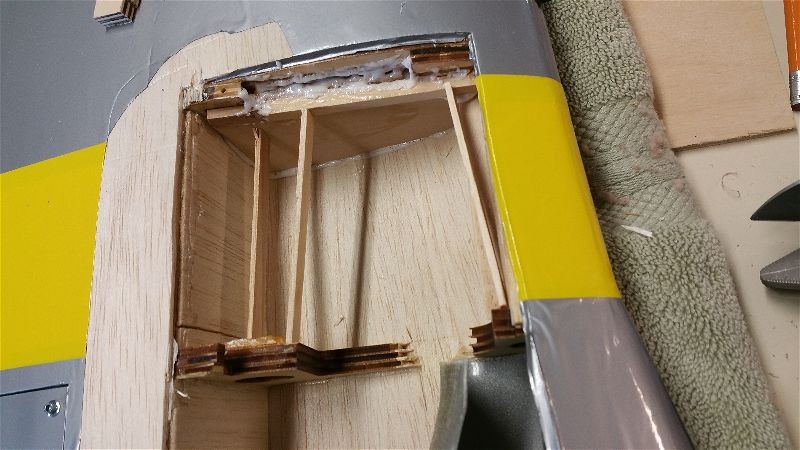
Here, I’m fitting some new wood at the top of the inboard rib to give it some meat to mount the gear into!  What was there previously is a shredded mess.

2016-03-19 14.04.58-opt

You can see that not only is the rail gone on the outboard side but the underlying wood was split and pulled away as well.

2016-03-19 14.04.53-opt

After fitting that, I had to do some similar work on the outboard side.  This time just scabbing in some additional wood to provide a good base for the rails there.  Needed to use some temporary braces to hold it in place while the glue dries.

2016-03-19 16.03.54-opt

A bit later with all the rails in place and with careful alignment and drilling… the gear is in place.

2016-03-20 18.00.59-opt

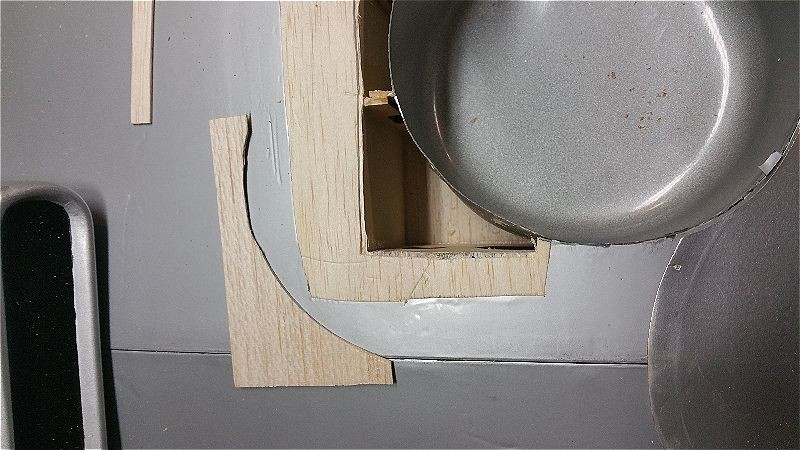
Next I had to piece in the sheeting around those wheel wells.  I actually made markings to cut the curved sections by pressing the balsa sheeting down over the edges and letting the fiberglass cut/mark the wood enough to then use my Xacto to finish cutting the outline.


2016-03-20 19.51.20-opt

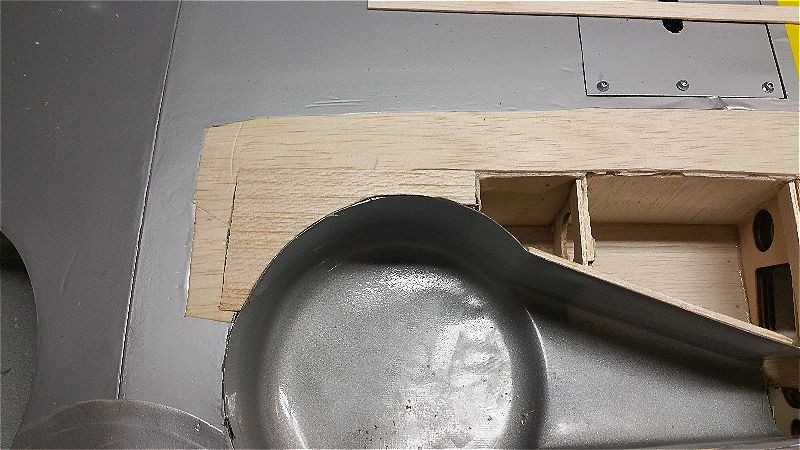
Then just drop it in place and wick in a little CA and we are back in business… well close anyway!

2016-03-20 19.52.41-opt

Here you can see some of the railing that needed to be replaced as well as the scabbing for some of the ribs that were a bit… crushed…

2016-03-20 18.23.13-opt

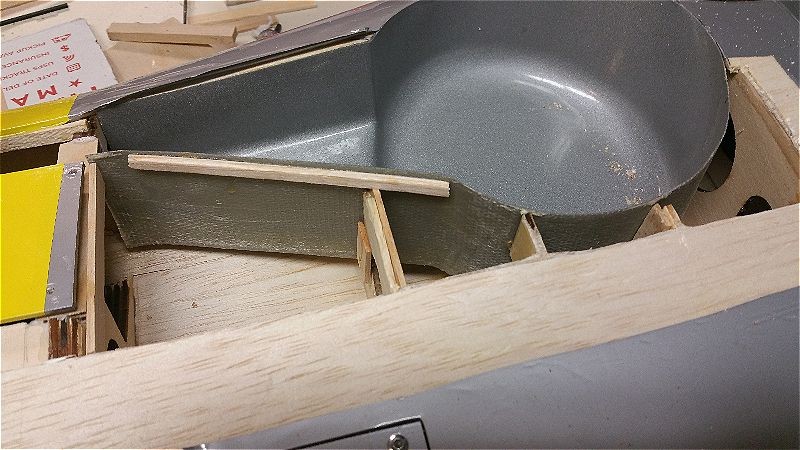
Here’s another piece fitting into place…

2016-03-20 19.58.19-opt

Here it is with all the parts in place…

2016-03-20 20.14.19-opt

Next, had to re-cover and drill new holes to mount the landing gear cover.

2016-03-24 20.51.06-opt

After a little covering, the wing looks… well, good enough!  I could have spent more time and made this look better but this part of the airplane is only seen as it is flying by at 50′ and 50 miles per hour.

2016-04-08 21.09.40-opt

I am just not willing to invest the time at this point in an airplane that is unlikely to see much flight time.  I’m more interested in fun, and this bird looks cool but just isn’t my cup of tea.

I’m looking now at putting some new batteries in (and losing a bit more weight in the process).  The present pair of 2300mah A123s are 6 years old I believe and really larger than they need to be.  If I get some good high quality A123 1100s I would have plenty of capacity to get in half a dozen flights between charges, and still save another 4-6 ounces.  With that I should be getting closer to 1-1.5 lbs lighter.  I have great hopes this will positively affect the overall flight characteristics.

I’ll try to post an update or two later in the summer when I get a few flights in.

Hangar 9 F4U-1D Corsair ARF build – The Evolution 77cc radial arrives!

Today my flying buddy Gary stopped by to give me a taste of his latest acquisition… the Hangar 9 F4U-1D 60cc ARF.  Gary has only been flying a couple years, but one plane has always caught his eye more than any other… the Vought F4U Corsair.  The distinctive WWII war bird is instantly recognizable to most and a favorite to many.

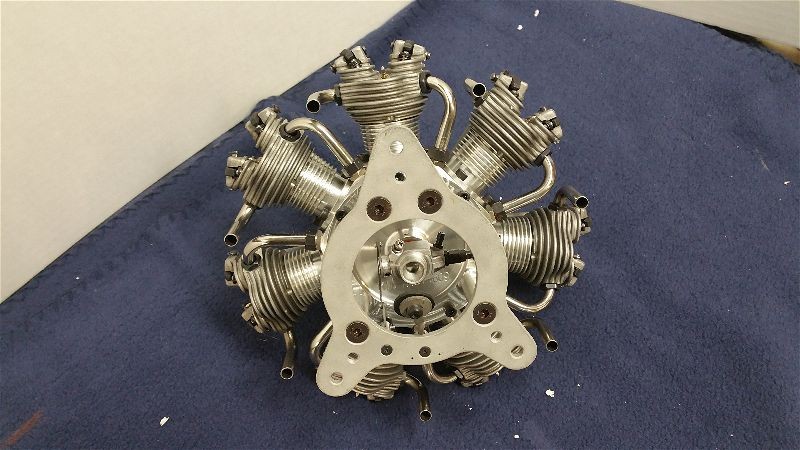
Gary stopped by today with just a few of the many parts and pieces required to get this big beautiful bird in the air.  First and foremost is the power plant.  Gary had the opportunity to see this engine at the Horizon booth when we attended and I think that pretty much sealed the deal.

The Evolution 77cc 7 cylinder glow 4 stroke is a piece of art.  It comes complete with a glow wiring harness and integrated mount.  But if you thought your wallet was done taking a beating when you bought the engine… probably not so much.  Most will want the collector ring (at additional cost of course) and an on board glow system as suggested in the engine manual (now that wallet can take a deserved short break).   Here are a couple shots from when we unpacked it today in my shop.

Here’s the money shot… This thing is just B-E-A-Utiful!

2016-04-09 14.48.13-opt

Even the mount is beautiful in an elegantly functional way.  Having the choke and throttle linkage thought out a bit for you is a nice touch as well.

2016-04-09 14.48.40-opt

There are some interesting little notes in the manual about oiling the push rods before each day of flying, adjusting valve lash when needed and inserting after run oil after every flying session by pulling a push rod and cam follower to add after run oil…  That all sounds pretty reasonable until you remember this thing will be hiding under a cowl, possibly with air baffling around the cylinders (again, a recommendation from Evolution) so maintenance is going to be a chore that no one with this kind of money invested is likely to be skipping I guess!  Ah, large fuel powered war birds…  They do enjoy being lovingly maintained!  What have you gotten yourself into Gary?  Of course it will all be worth it when we here the dulcimer tones that will be issuing from the exhaust!!  Oh, and watch out for hydro-locks in those bottom 2 cylinders!  I wonder if storage of the airplane “nose up” would minimize that possibility??

There are also some interesting recommendations on fuel mixes…  I don’t recall seeing 0% nitro with 10% oil on the shelf at the local hobby shop (for break in) nor 5/7 for later use…  Hmmm…  Better start looking for some pure methanol so we can mix up some custom fuel!!  This is where the modeling part comes in I guess.  I ‘m actually looking forward to seeing Gary in his “mad chemist” outfit with a bubbling cauldron… 🙂

All that aside, I really think it will be worth it all when that big bird lifts off.  This engine is going to demand some respect and loving attention for sure though.

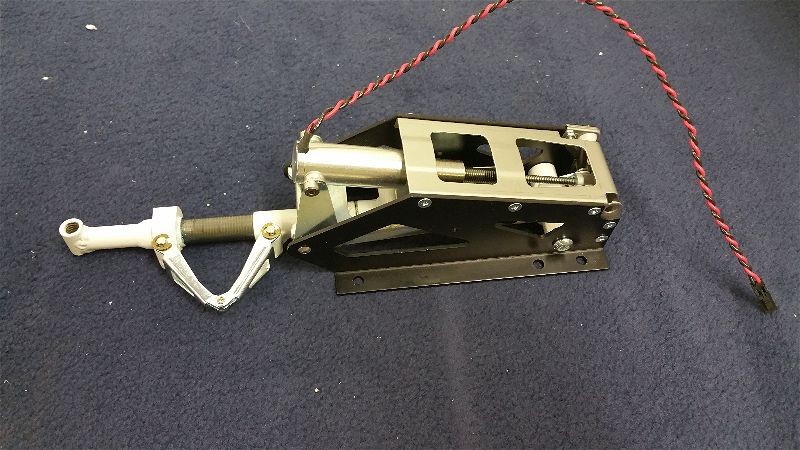
Also in hand when Gary visited were his main retracts.  You have to admire the engineering behind these as well.  Not only are you raising and lowering the wheels whilst providing some nicely spring loaded struts… but they have to rotate 90 degrees as well!!  These are Robart units with the electric actuator so I expect smooth action and simple setup… at least for retracts!

2016-04-09 14.50.20-opt

We didn’t get around to plugging together a receiver and the control board so we could cycle these… I’m looking forward to that as well.

Gary promised pictures and some commentary as he gets started  building so I’ll try to post occasionally on how it is going.  Especially on anything interesting, troublesome or particularly cool.  We are already talking about ways to avoid the 2lbs of nose weight they claim we will need!  I hate lead in an airplane.

More as Gary progresses.

P-51 Redtail… Patching the fuselage… getting closer!

I’ve been rolling right along working on the restoration of the P-51 Redtail to flight status.  Today I worked on some minor dings and one big hole that was inflicted during the “off-airport landing” that occurred last year.  Yep, I landed a bit short, not crashed!!  Never that…

So this method of covering up the boo-boos originated with another war bird that belongs to my flying buddy Kelly.  During the construction of his P-40, as I was finishing up one night in the shop, I picked up the wing I had just finished some work on.  I believe it was the final item on that wing… probably some servo linkage… that I had just finished and I just needed to sit the perfect wing in the corner so I could clear the bench for another part of the project.

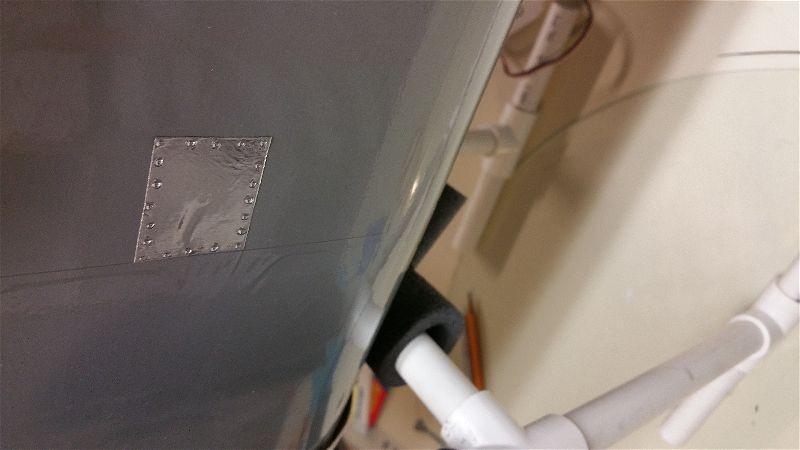
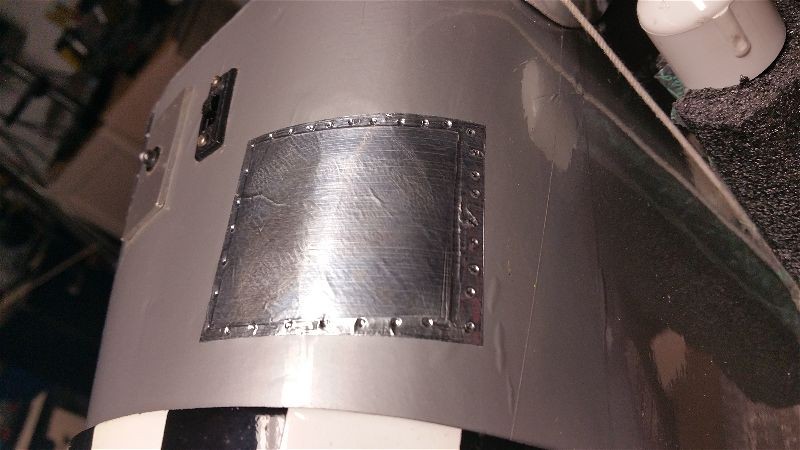
As I swung the wing around the very sharp corner of the bench jumped up in front of the top wingtip surface on one end… maybe 2 or 3 inches in from the tip.  It made a really nice divot in the wing and I began to… recite the rosary… that seems right… I know there were some words directed at a deity.  That I’m sure of!  Anyway, as I unsuccessfully tried to smooth out the damage I thought of the hours of filling/sanding/recovering I’d have to do in order to even come close to restoring this area to it’s original state, I realized that war birds are never this perfect…. Why should this one be?  I looked at a few pictures of patched up old birds in real military service and thought I could approximate that look (riveted on bare metal patch).  I found a role of aluminum foil/metal duct tape, cut out a square and carefully applied over the ding.  Not bad but then I snuck over to my wife’s craft table and found a tool that looked like someone stabbed a BB with an ice pic! Eureka!!  A little application of that tool around the edges and my patch job had rivets… or at least close enough for me.  After a year or two of flying, that original application is still in place.

So for the Mustang and a few assorted dents and dings….  Here are a couple examples.

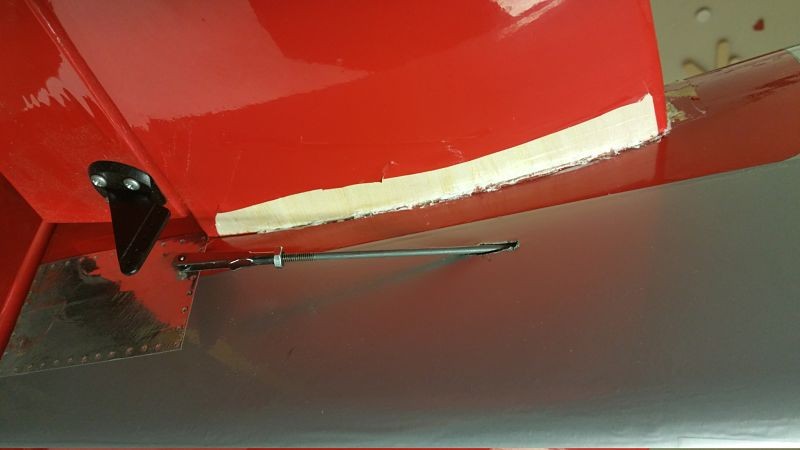
This is one to cover the crack that continued from the bottom of the elevator surface back almost to the trailing edge of the fixed portion of the tail.  A little glue in the crack and add the “riveted patch”!

2016-03-13 18.32.10-opt

This one is right out in the open on the side of the body below the cockpit… Any patch I put here is going to be visible so why not make it look “natural”?

2016-03-13 18.32.02-opt

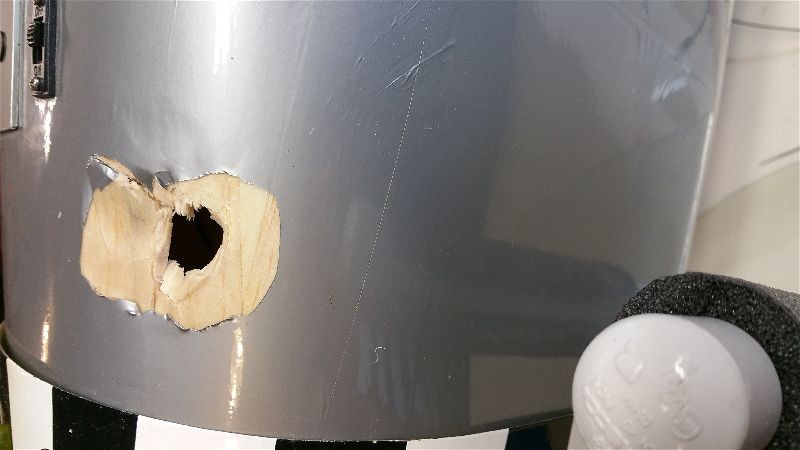
Then comes this monster!

2016-03-13 18.17.50-opt

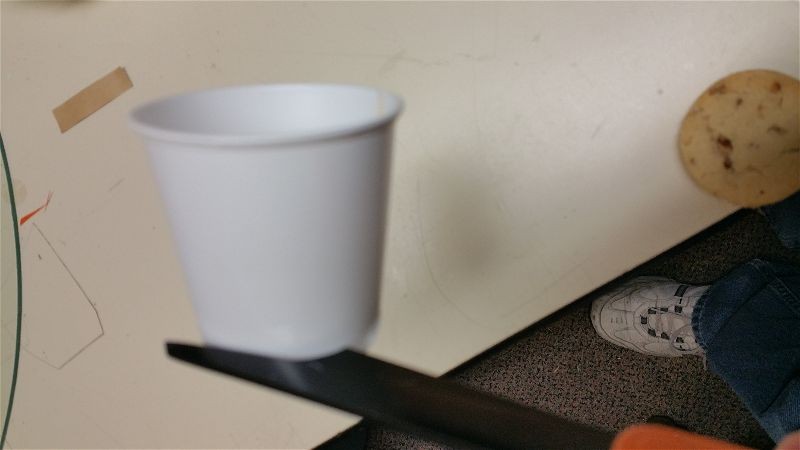
This is just behind the cowl and right where my hand and/or any cradle I might put the plane on tends to rest… plus it is hard to get to the back of this without pulling the fuel tank, which involves pulling the receiver, etc..  I’d normally add at least some sheeting from behind but with that being such a pain…  I decided to try a bit of reinforcing before I used the “metallic duct tape” trick.  Looking around for some reinforcing I came across some small plastic drinking cups and went to work.  The first task was cutting out an appropriate size and shape to cover the damage.  The curvature of the cup worked to my advantage on this curved section.

2016-03-13 20.02.03-opt

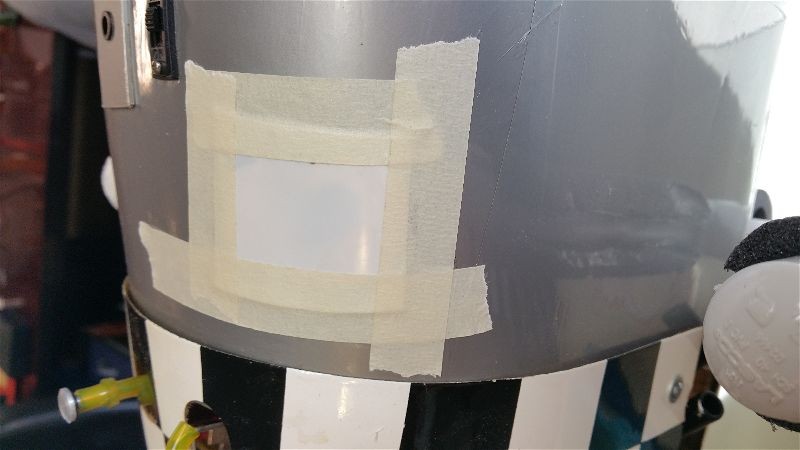
With some more Gorilla glue and a little masking tape, I attached the plastic reinforcement and left it to dry for a few hours.  Just in case you don’t find this easily in your local store… here is a link to it on Amazon.  Gorilla Glue

2016-03-13 18.20.48-opt

Then finally I carefully peeled the masking tape and applied the metal tape.

The tape seems to be the ideal thickness and seems to be quite permanent so I’ll post a link to it here.  I’m sure there must be other equivalents out there but this is what I use.

So that’s about it for now.  I need to get back to doing a little covering work on the wing and I’ll be getting very close to another “maiden” flight.


P-51 Redtail… More progress. Wing repairs progress.

Further work is occurring on my quest to reassemble the Redtail without spending significant dollars and simultaneously lightening it up a bit in the hopes of improved flying traits.

The latest is around the port side (that’s left if you were to sit in the cockpit of the P-51 facing forward) main landing gear mounting area and wheel well.  That area took significant damage during the abrupt meeting between the retracts and beans at about 35mph!  Yep, that is about stall speed… or at least is was that day.

Here is a sequence of pictures showing the progress.  Most of this was simply measuring, cutting, fitting and a fair injection of TLAR engineering methods to try to get something put back together that will stand the strain.  TLAR… you know… “That Looks About Right”!

After cutting out the sheeting and getting rid of the various splinters and unidentifiable fragments here is what I was left with.


2016-03-19 14.04.53-opt

I cut away even a bit more before adding back a bit of structure…  Rebuilding the rails so that the screws have something solid to bite into required some temporary bracing…

2016-03-19 16.03.54-opt

Then I started building the actual rail structure and piecing them together with an eye toward making sure there was some interlock to help add some strength.  This rail notches into the rib and creates a lip for the rear rail to rest on.

2016-03-19 14.04.58-opt

Here, all the rails are in place and all of the mounting screws have been drilled and put in place… lots of advanced TLAR to get the placement right (I hope).


2016-03-20 18.01.08-opt

Then came the puzzle of re-sheeting around the fiberglass wheel wells.  I cut the existing sheeting back to expose a bit of the top of the spar and then pressed the sheeting down over the fiberglass to give me a cut line.  This created shapes like this ones.

2016-03-20 19.51.20-opt


Then I added some small “railing” to catch the sheeting and give me some glue surface for the larger span of this piece of sheeting.  There was also some reinforcing and rebuilding of the ribs that contact the wheel well that had to be done.

2016-03-20 18.23.13-opt

Here are the pieces going into place.

2016-03-20 19.58.19-opt

And the final bits of woodwork are glued in.

2016-03-20 20.14.19-opt

From here is will just be some recovering work, though I have considered adding a bit of light fiberglass reinforcing underneath the landing gear mount area…  We’ll see.

Next up is finishing up the covering and the last of the repair work on the fuselage.

P-51 Redtail… Broken but progress is underway

I’ve been the owner of a 1/5th Scale Top Flite P-51 made up in “Redtail” colors for several years now.  If you want to see more on it there are several posts on it, just do a search for redtail or p-51 and you’ll find pictures and information on it.

Last year during a club outing I took her out for a flight or two and managed to stall it just feet from the runway.  The straight ahead stall from 4 feet or so caused the landing gear to catch the beans at the approach end of the runway and a fairly violent tail over nose tumble resulted.  Another main retract bending extraction from the wing, a punch in the bottom of the body just behind the cowl, along with the horizontal stab breaking loose on one side and cracking across the top of the tail was the result.  It was not pretty and it was just a case of not enough airspeed on approach… which I should know well but is easy to forget when you fly so many lighter, easier landing aircraft!

I was truly disgusted and tired of pouring money into this airplane.  It has not been a particularly fun or inexpensive airplane to fly and I began to wonder why I continued with it.  I can’t say I’ve ever gotten a great amount of enjoyment in flying it… It has pretty much zero of my top 3 most enjoyable attributes when it comes to RC aircraft.  It isn’t by any means an impressive flyer as far as it’s aerobatic capabilities, it isn’t easy to get flying or haul around, and it certainly isn’t low cost to fly either.  In fairness, I never expected it to be much more than what it is…  A complex, heavy, fast, expensive, nice looking and perhaps even impressive war bird!

I talked myself into putting it together and flying it partly just for the varied experience of doing so (check), as a nod to my flying buddy Tim (check), and just to have something that would be both impressive and welcome at war bird and giant scale meets (check).  The problem is that I just never really enjoy the way it flies… heavy and fast just aren’t my thing.  When I do fly it, I get simultaneously bored with the way it flies and apprehensive since it never flies for long without something needing fixing, adjusted, etc… and often the cost of those repairs just isn’t top of my list so flights are to far apart to ever get totally comfortable with it.

So after the last crash I wasn’t sure I was ever going to get it flying again.  It sat over on the side bench for months without my giving it more than a glance and a frown.  Several times I had decided to just part it out and or maybe just clean out the expensive bits and do some work to make into a display only airplane with a dummy engine, etc…  Finally, I started thinking (maybe it’s just loss of memory and old age) that maybe I could make it fly a bit better and take some of the complexity out of it to make it a bit more reliable??  There are still occasional events I’d like to take it to.  Of course that means making it flyable again… without breaking the bank either!

So here is the plan.  First, I’ve started working on repairing the damage to the tail and done at least a little cleanup and analysis of the landing gear mounting area.  I expect to be able to patch it up with a moderate effort and very little expense.  Here are some shots of the repairs in process.  Gorilla glue is wonderful thing.

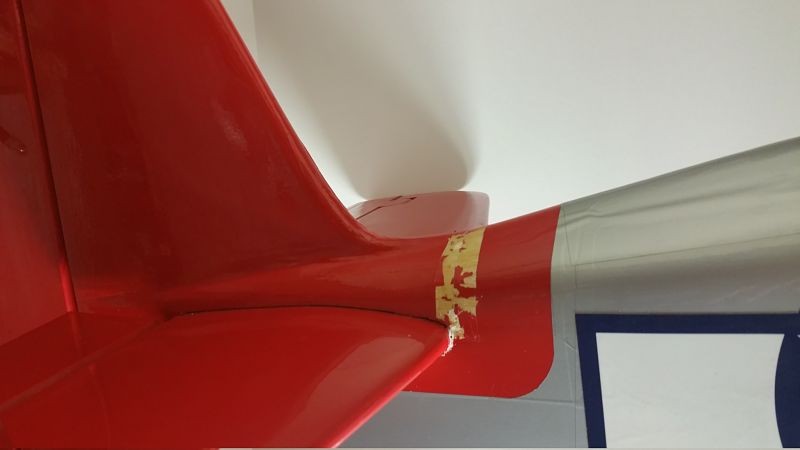
This is the bottom of the horizontal which had separated from the body along the glue line.

Tail1_opt

This is the point where the wood cracked and broke across the top of the tail…  It was one continuous crack/break from that bottom area above all the way across.  This allowed the horizontal to “flex” approximately 2″ up at the tip of the horizontal/elevator!!

2016-03-15 21_opt

In addition, one of the main landing gears is toast…  Apparently ripping the retract assembly out of the wing, tearing out chunks of wood, shearing the self tapping screws and bending the assembly followed by attempting to pull the retract controller (which is roughly the size of deck of cards) by the wires out of the wing via a quarter size hole… is a bit hard on the electric motor in the retract!!  For some reason it doesn’t work anymore!!  I guess Robart just doesn’t expect that sort of thing when they build these… go figure.  So there will be no more retracts!

So if I get out of the retract business and patch together the wing damage, I can avoid spending about $300 and shave off some ounces.  Leaving the controller and both the main retracts behind looks like it will save me about half a pound.  While I’m at it, I’m going to pull all of the telemetry.  I have enough info from the flights I’ve made that I know pretty much everything I wanted to about how it flies.  I may even spend a few dollars to go to two smaller main flight packs (I can reuse the larger packs that are in this airplane elsewhere).  If I can manage to trim a full pound out of this bird I wonder just how much better it might fly!?

Here are the completed repairs at the tail with it all buttoned back up.

2016-03-18 20_opt (1)

2016-03-18 20_opt

It seems strong enough.  More to come as this is getting done a bit faster than I first supposed.

Aeroworks BD-5B – final touches and photos

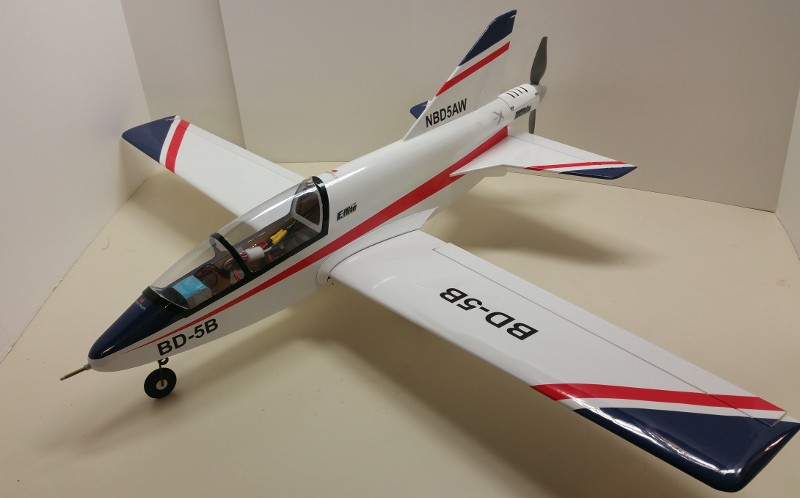
Did some final work on the BD-5B this evening.  Here are a couple photos… still pre-flight.

2016-02-10 20.29.02-small

You can see the Pitot tube (which I love on this plane) along with some of the decals in this shot.

2016-02-10 20.29.42-small

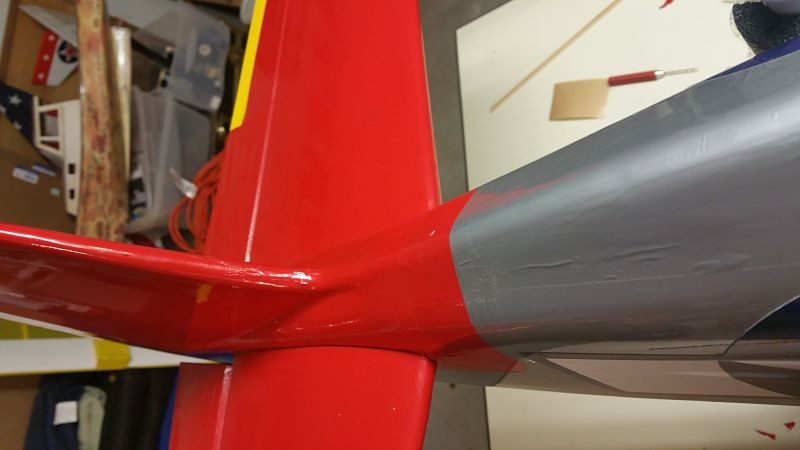
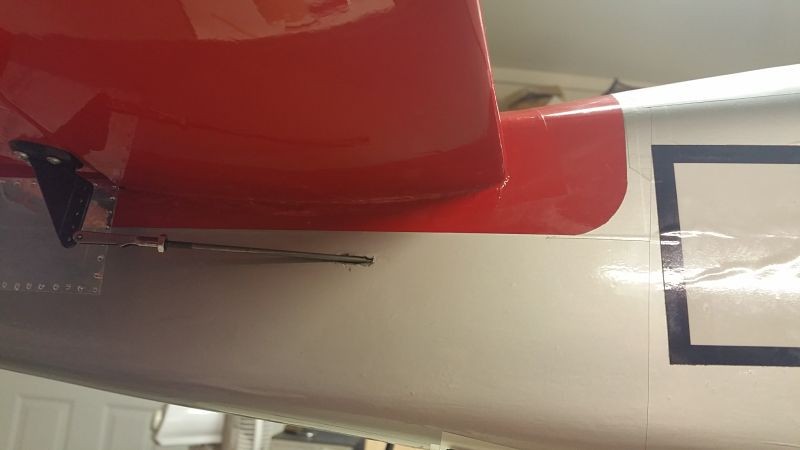
The rear end of this plane has some bite!  That spinner (stock) is nice looking and the APC 7x6E looks great and certainly seems to produce some push… at least sitting on the bench.

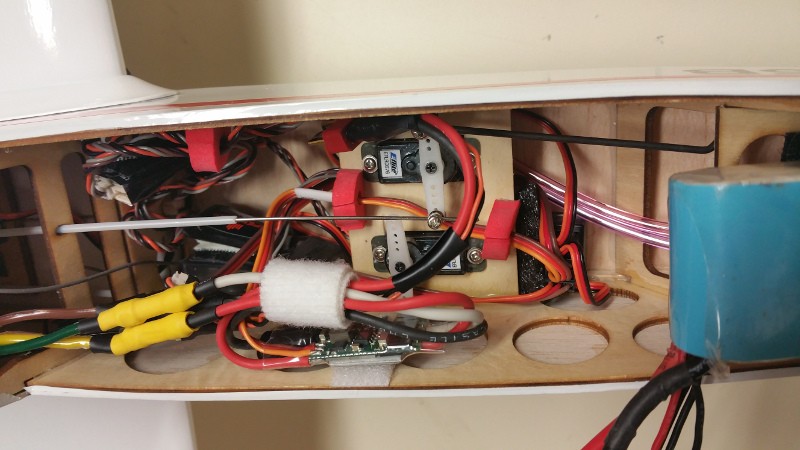
2016-02-10 20.25.55-smallThis view shows the interior which is admittedly cramped and messy with all the goodies stuffed in the right places to make the balance come out as specified.  You can see the 2200mah 3S LiPo on the right (tucked into the nose).  The tubes coming out from underneath it are going to the pitot which feeds pressure to the airspeed sensor which is tucked in the back (left/upper in the picture) part of the area under the canopy.  Hidden under the wires in that same area is the Variometer as well.   The Castle speed controller is velcro’d on to the sidewall at the bottom center.  At the bottom left of the photo just behind and below the speed controller is the telemetry receiver with the g force sensor attached to it.  Just in front of the servos, just peaking out from under the servo tray is the Spektrum receiver.

This may be a bit of over instrumentation for this little bird but once I see the data I can always pull some or all of it out… except the pitot/airspeed as it just looks to good to lose it!  Hurry up spring… I need to get a few flights on this bird.  🙂


Aeroworks BD-5B… Assembly

Over the past couple weeks I’ve been working on several projects in the shop as the weather in Indiana has not been especially hospitable for flying.  It has been quite a bit warmer than in most years past for the time of year but still not up to my standards for comfortable flying.  Sometimes the temperature tempted me but those mild temps usually came with gusty strong winds so no flying lately for me.  The good side of that is it gives me some time to work on some projects in the shop!

The latest is the Aeroworks BD-5B I just finished putting together.  Mine is pretty close to stock with only a couple small exceptions.  On mine there is a pitot tube sticking right out of the front of the nose… which is about the only visible difference.  I actually like the look of it on this air frame.  Other things that are not exactly per the directions are:

  • E-Flite DS76 servos instead of the specified Hitec 55s…  I like the 55s just fine but as speedy as this thing is likely to be I like having extra precision and torque of a digital.
  • In addition to the pitot for airspeed, I also have a g force sensor, variometer (altitude and altitude rate of change), temp sensor around the HiMax motor body, and voltage monitor at the pack as well as from the receiver bus.
  • I chose the Himax 2815-1400 per the written instructions which seems to be rated for quite a bit less power than the E-flite motor now recommended on the Aeroworks web page…  I hope it will be sufficient.

I still have to setup the control surface throws and exponential settings but everything else is pretty much buttoned up at this point.  Centering and direction of surfaces has been set.  I need to apply the decals and any other final cosmetics I want to add and I haven’t picked up the propeller yet, but that is about all that is keeping it from graduating from static model to aircraft at this point.

There were a few minor annoyances when assembling… Belly pan fit could have been better, Canopy could extend down just a bit more or maybe have a structural frame added to help it fit better/keep its shape.  Also, I am not a huge fan of the extensive use of the EZ type connectors where only set screws are keeping the control rods from slipping…  Much prefer ball joints, standard pin clevises, Z-bends… really most other connection types!  I may think about replacing some of those either before the first flight or shortly after if all seems to go well.  Just seems a bit “under” designed for a plane that is going to (I presume) move along briskly as I expect this to.

My bird is 29 ounces with a 3 cell 2200mah on board.  With the Himax 2815-1400 and an APC 7x5E or similar, I expect about 150 watts which should give me decent performance… 85mph? more?  We’ll see soon.  I am a little concerned if this will be enough, plus I have never flown a pusher and the lack of airflow over the surfaces at lower speeds (no propwash) has me thinking that landing this might be a bit more interesting.  Only one way to know for sure!
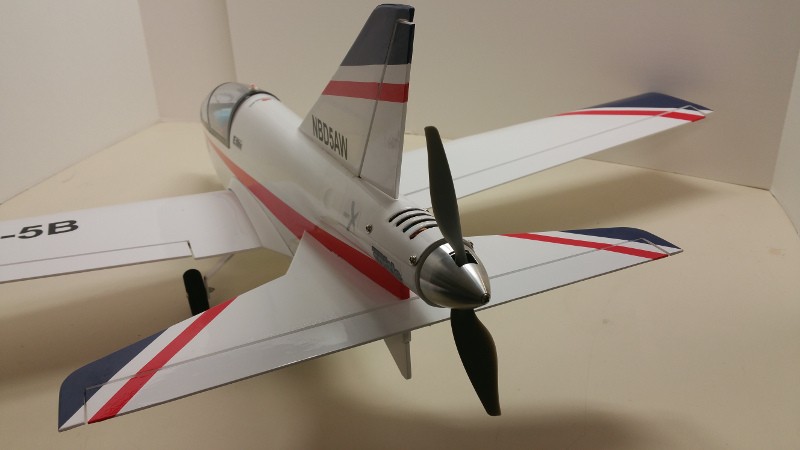
I have had this ARF sitting on my shelf for a couple years but until we got a geo-textile runway recently, it just would have been impossible to take off or land without risking damage.  Now, with a place to fly, it is finally going to get its chance to soar!  Once I dot the last i and cross the last t and get a flight or two I will take some actual pictures and do another post on how it actually flew.. or didn’t!!